
“Just as a tree needs strong, deep roots in order to grow tall, a human being needs to be firmly rooted in their environment in order to rise spiritually.”
Jayakrishna-ji
Navayuga’s primary purpose is spiritual: to offer a setting conducive to practice, inwardness and teaching. But Jayakrishna-ji considers that in our time another dimension must be taken especially seriously: repairing the bond between human beings and the nature of which they are a part.
This second vocation does not replace inner work. It gives it a concrete extension in our relationship with the earth, water, animals, our food and, more broadly, the living world.
A RELATIONSHIP TO REDISCOVER
nature is not the backdrop to our lives
The Earth nourishes all its inhabitants, including human beings. We live through what it gives us, and yet our relationship with it has become increasingly distant and utilitarian.
Food is a very concrete example. Overexploitation, industrialised production and trade have profoundly changed our relationship with the nature that feeds us. Rediscovering a more balanced relationship also means eating healthily, receiving our food with gratitude and caring for the earth that nourishes us.
The same is true of water, soil, plants and animals. Spiritual awareness cannot remain entirely separate from the way we treat the living world around us.
CARING FOR THE LIVING WORLD
ecology and consciousness belong together
This is not about adding an ecological sensibility because it happens to be fashionable. It is about rediscovering a conscious relationship with that on which our own life depends.
Respecting life in its different forms, limiting what we take, restoring the earth’s capacity to nourish, caring for water and encouraging biodiversity are simple actions, but they profoundly change the way we inhabit a place.
At Navayuga, this attention to the living world is therefore part of practice in the broad sense: it invites us to move beyond a relationship based only on use and rediscover one grounded in gratitude, responsibility and care.
AT NAVAYUGA
putting this into practice
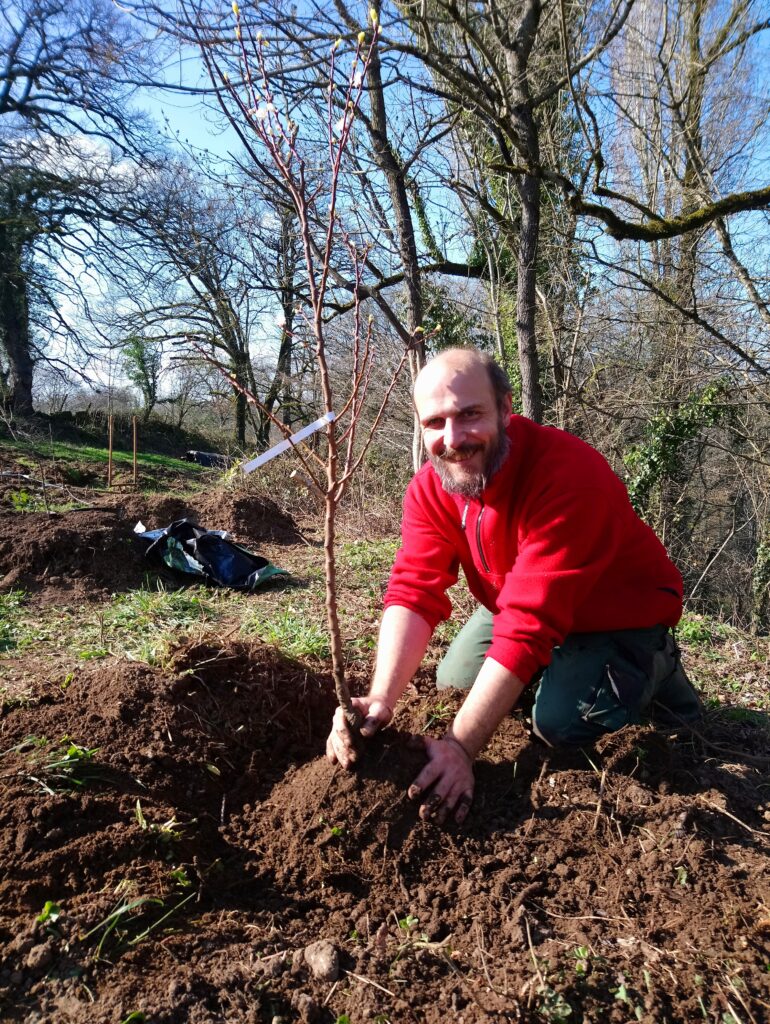
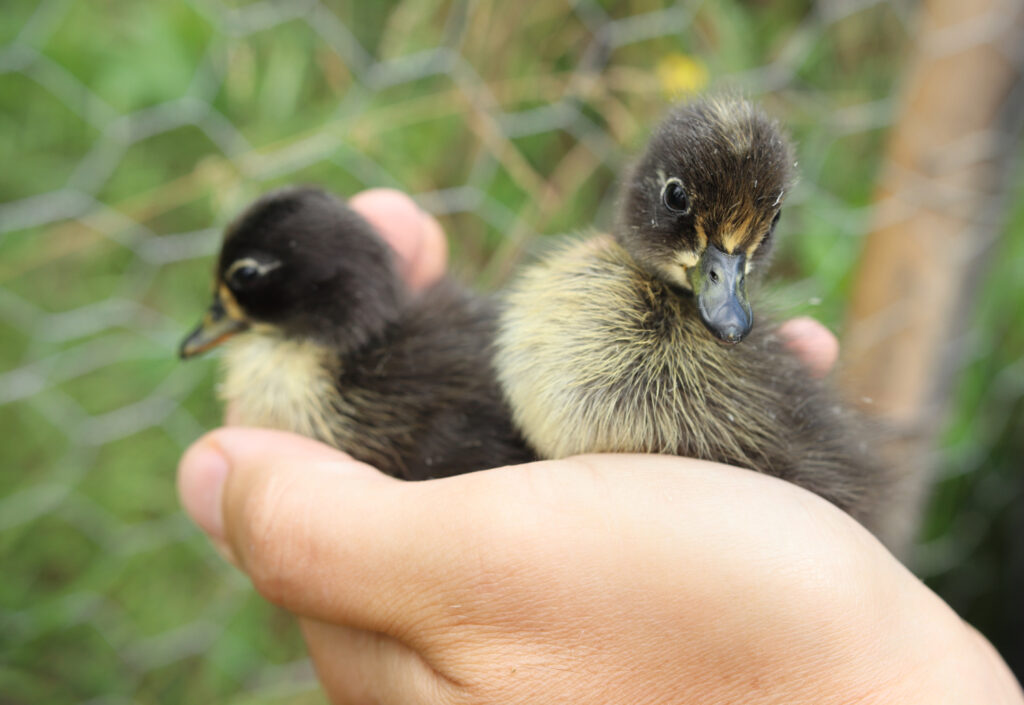
This vocation has already taken very concrete forms on the land: food crops, the planting of many fruit trees and other useful or edible species, the creation of a natural pond, beehives, sheep, goats and ducks, and the gradual development of areas favourable to biodiversity.
A water pathway is also being developed to retain water on the land and encourage its natural purification through a series of ponds and suitable plants. The choice of dry toilets reflects the same intention to preserve water and limit the impact of the site.
Further developments will gradually continue in this direction, guided by a simple idea: to make the ashram a place where inner practice and the way we inhabit the living world are not two separate concerns.